Discover Books
Explore indie authors and find your next favorite read
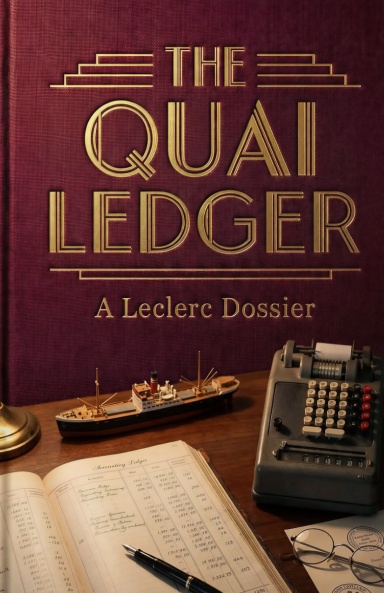
The Quai Ledger
by Guy Taylor
The Quai Ledger Volume 1 of The Leclerc Dossiers Paris, 1947. A routine audit uncovers three fuel shipments that exist on paper but nowhere else. When Inspecteur Leclerc receives a grey cloth ledger marked by missing invoices and a directive to handle the matter discreetly, what appears to be a minor accounting discrepancy begins to widen into something far more dangerous. Summoned into the administrative machinery of postwar reconstruction, Leclerc and Inspecteur Morel trace the missing records from ministry offices to riverside warehouses, where every signature appears proper and every explanation arrives a moment too quickly. The quantities are modest. The paperwork is precise. But the pattern is too deliberate to be clerical error, and the trail leads toward a system built to protect itself. As Leclerc moves deeper into the case, he discovers that the missing fuel is only the visible edge of a larger institutional deception, one tied to contracts, access, and the quiet authority of officials who understand how easily truth can be amended on a page. To solve the case, he must determine not only who altered the ledger, but why so many people are prepared to keep it buried. The Quai Ledger is the first volume in The Leclerc Dossiers, a postwar Paris procedural series defined by administrative detail, political pressure, and controlled suspense. Blending the methodical discipline of a police investigation with the institutional tension of a political thriller, it introduces a detective who understands that in modern France the most dangerous weapon is often a record no one was meant to keep. For readers who appreciate Georges Simenon, John le Carré, and historical mystery series built on precision rather than spectacle.
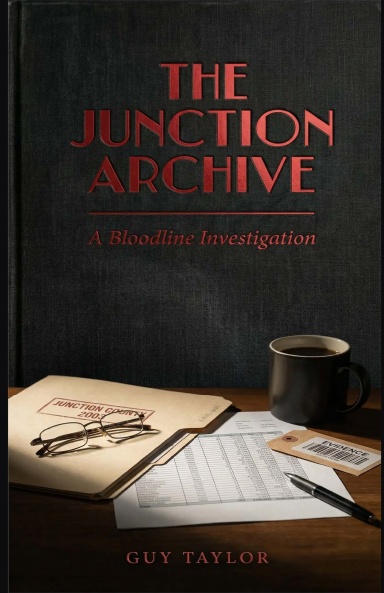
The Junction Archive
by Guy Taylor
The Junction Archive The Bloodline Investigations Volume 1 When O.B.I. Special Agent Mara Kincaid flags a suspicious gap in a cold case file, she brings it to Aris Thorne, the Bureau's data integrity archivist. What begins as a routine records review becomes something else entirely: fourteen homicides, filed across two decades as unrelated incidents, each one closed without a conviction. The cases were not buried. They were simply never connected. The system worked exactly as it was designed to, and that was the problem. As Aris and Mara work through the archive, crossreferencing evidence logs, witness statements, and investigative notes that were never meant to be read together, a pattern emerges. Not a conspiracy. A failure. Quiet, institutional, and entirely preventable. In a world where justice depends on documentation, the most dangerous thing is not a coverup. It is a file that no one ever opened twice.
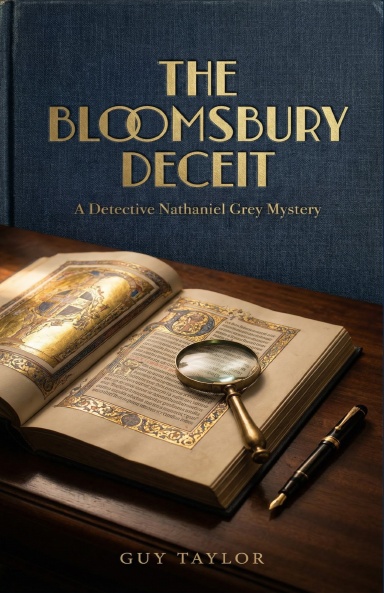
The Bloomsbury Deceit
by Guy Taylor
The Bloomsbury Deceit Volume 2 of The Detective Nathaniel Grey Mysteries A locked room. A dead antiquarian. A manuscript that could rewrite history. London, 1926. When rare book dealer Marcus Bellingham is found dead inside his locked basement vault in Bloomsbury, the local constabulary is quick to rule it a tragic accident. Inspector Nathaniel Grey sees something else: a scene too composed, a silence too deliberate. Bellingham was not simply a dealer. He was a man who traded in secrets, and his final acquisition was a manuscript that certain men would kill to possess. As Grey moves through the labyrinthine world of London's antiquarian book trade, he uncovers a sophisticated forgery ring operating in the shadow of the British Museum. When a Cambridge professor connected to the manuscript dies in a convenient accident, the pattern becomes clear: Grey is not hunting an opportunist. He is hunting someone methodical, patient, and entirely without scruple. From the reading rooms of Bloomsbury to the hushed corridors of academic authority, Grey must learn to read the spaces between the lines; where the most dangerous documents are the ones that were never meant to be found. The second volume in the Detective Nathaniel Grey Mysteries. For readers who appreciate intricate puzzles, institutional atmospherics, and the architecture of the classical British detective novel.
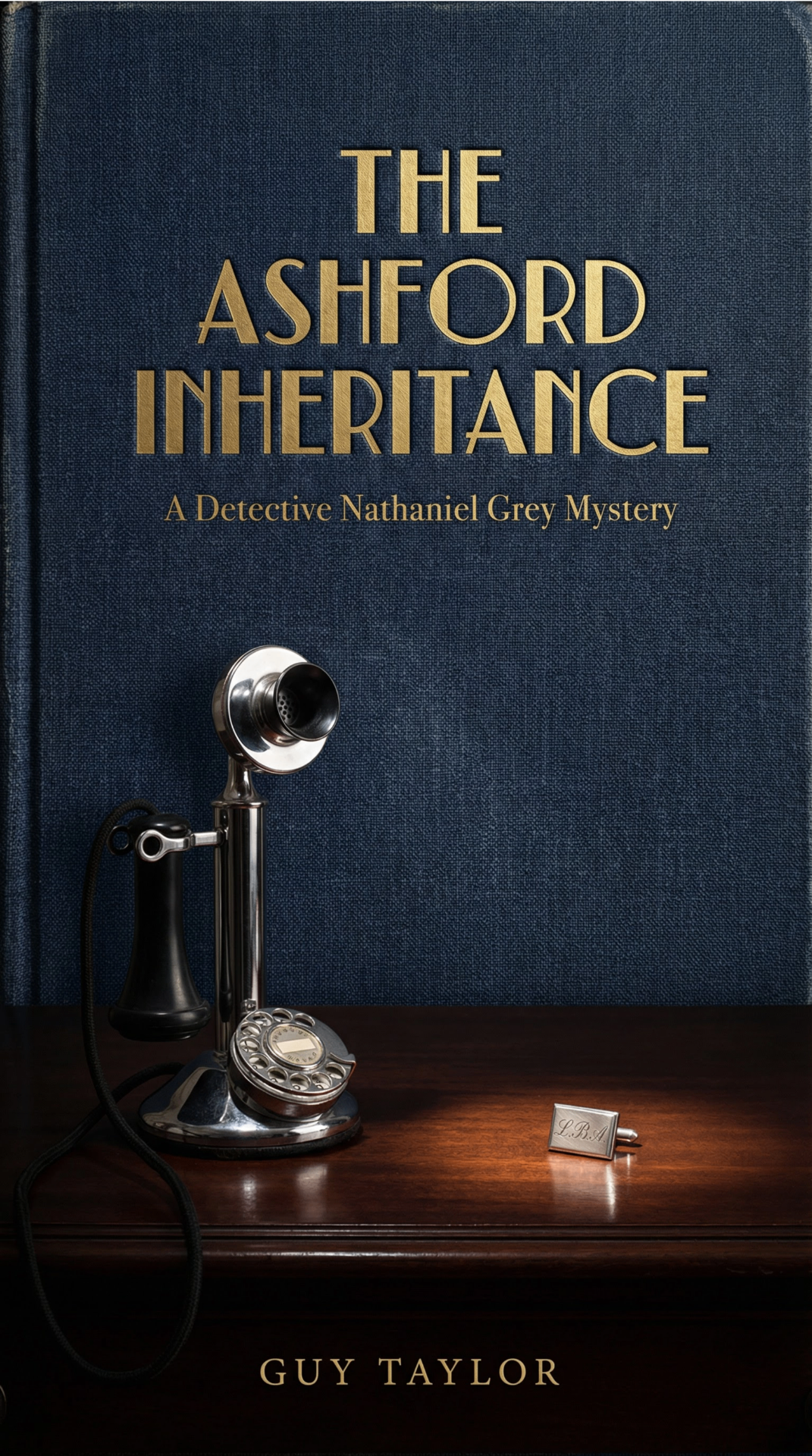
The Ashford Inheritance
by Guy Taylor
The Ashford Inheritance A Detective Nathaniel Grey Mystery Volume 1 of The Detective Nathaniel Grey Mysteries Some secrets are hidden. Others are protected by the institutions that built them. England, 1925. When a forged will and a poisoned secretary disrupt the quiet order of an English manor, the local constabulary sees a tragic domestic dispute. Inspector Nathaniel Grey sees a system working exactly as intended. Summoned to the Ashford estate, Grey brings a methodical precision to a case that refuses to remain contained. The body count is rising, but the violence is not random, it is structural. Someone is systematically erasing every piece of paper, every witness, and every memory that contradicts a lie worth millions. As Grey navigates the locked rooms and silent corridors of the estate, he realizes he is not just hunting a killer. He is dismantling an archive of deception that spans generations. To solve the murder, he must first understand the architecture of the lie. The Ashford Inheritance is the first volume in a tenpart historical procedural series. Blending the lockedroom mechanics of the Golden Age with the institutional weight of a modern espionage thriller, it introduces a detective who understands that the most dangerous weapon in the world is a redacted file. For readers who appreciate the atmospheric tension of Agatha Christie and the procedural discipline of John le Carré.